
The Growing Importance of Reverse Logistics in Supply Chains
- Mar 18
- 7 min read
Written by Vaish Akella (Research Lead), Niyathi Manivannan (Research Lead), Sri Harshita Boddu, Arham Jhaveri, Sajan Pinnamaraju
EXECUTIVE SUMMARY:
Reverse logistics is driven by different industries leading with e-commerce, consumer electronics, and automotive who are all strongly driving return volumes and value recovery
Returned goods are processed through special centers, varying depending on product, where items are routed for resale, repair, or recycling using automated and AI systems
Major environmental implications surround reverse logistics, especially inefficient returns contributing to carbon emissions and waste
The continued growth of e-commerce is rapidly accelerating investment in technologies like AI and more automated return hubs to manage the increasing amount and volumes to improve efficiency
Introduction
Reverse logistics has become a growing sector of supply chains as companies are getting pushed to manage increasing volumes of products. Through the rapid growth of e-commerce and expectations within consumers for easier returns, businesses are pressured to develop efficient systems in handling products that are moving backwards through the supply chain. Companies are now focusing on recovering the value of these products through different processes such as repair, resale, and recycling. Bigger industries such as retail and automotive tend to heavily rely on reverse logistics to increase efficiency and reduce costs.
What Markets are Involved
Within reverse logistics, there is a variety of markets that are involved, but some of the top ones include Retail & E-commerce, Automotive, and Consumer Electronics. The Retail & E-commerce sector is the biggest growth because online shopping creates a huge opportunity for returns due to many problems a consumer may face such as sizing, quality, and wrong products being delivered (MarketDataForecast). A main problem this sector faces is when it comes to bulky items such as furniture and large goods (Theplanner). It is important to improve the return process to ensure there isn’t large room for error.
Consumer electronics is an important market share to touch upon because of its high return rates. Many electronics are returned due to trade in values, unsatisfied customers, and compatibility issues (National Retail Federation). Electronic devices add value because it can generate profit which is helpful to the company's revenue. The drastic increase in returns for these products showcases that the reverse logistics process needs to be in an orderly fashion because along with electronics comes a lot of steps into checking if the product is returnable and reusable (Fortune Business Insights).
The last main market is the automotive sector, which is different from the consumer market. Most if not, all automotive returns are due to defective parts, recalls, and warranty claims (Fortune Business Insights). This is extremely important because in this industry with returns comes a high loss in cost due to millions of dollars being spent on manufacturing products. Often with recalls, it can lead to companies getting acquired or shutdown. Looking at rising spending in this industry; electric vehicles have also begun to focus on the reverse logistics component because recovering batteries and materials that are expensive can add a positive revenue stream (Ken Research). Overall, automotive relies heavily on recovering returned items due to cost and efficiency.
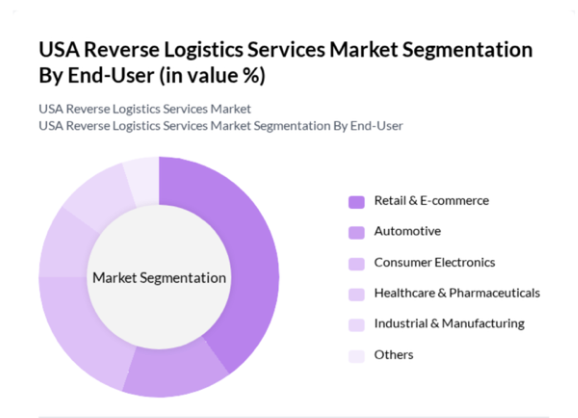

Figure 1 and Figure 2 go together because the graph on the right which is the By-Type figure shows the industry type and the graph on the left which is the By End-User figure shows the reasons behind reverse logistics. Retail & E-Commerce is the biggest sector, and returns management is the highest percentage in reasoning, showing that the two graphs go hand in hand.
Where Goods are Sorted
Returned goods are rarely moved backwards through the same path as newly produced products. They enter a specialized reverse network designed to potentially recover the value of the item and reduce waste (Manhattan Staff). When a product is returned to the drop-off location, it is sent to a processing center. These locations are different from a regular forward flow warehouse, as their primary function is to inspect and evaluate items rather than fulfill new orders. Depending on the item’s condition and demand, it could be sent to a resale warehouse, a repair facility, or any secondary market where the product may be discounted. The items that won’t be sold are sent to recycling or waste centers.
Through AI and automation, firms are transforming how returned goods are processed, especially inside modern return hubs and warehouse sorting facilities. Companies are increasingly using automated scanning, barcode recognition, and AI-driven decision engines to quickly identify product conditions and determine whether items should be restocked, refurbished, resold, or recycled (SupplyChain247). Major retailers like Amazon are also investing heavily in AI to enhance delivery and logistics networks, improving how goods are sorted and routed across fulfillment centers (Reuters). Real-time visibility systems update inventory instantly, and AI-powered workflows help disposition decisions to minimize waste and maximize resale potential (ReverseLogix). These technologies allow companies to handle higher return volumes and improve customer satisfaction efficiently while reducing operational friction and lowering costs.
Environmental Impact
Reverse logistics plays a growing role in sustainability, keeping products in circulation through repair, resale, replacement, and recycling. This aligns with DHL’s 5 Rs framework where value is recovered through Returns, Reselling, Repairs, Replacements, and Recycling to extend a product’s lifespan (DHL). Consolidated shipping through local Pick Up and Drop Off points reduces unnecessary transportation, lowers carbon emissions, and diverts broken goods from landfills. As companies face increasing pressure to adopt sustainable practices, efficient return systems have become essential for minimizing waste and energy consumption. However, poorly managed reverse logistics can have the opposite effect. Investigations show that inefficient return processes often result in products being discarded due to high handling and transport costs, creating avoidable environmental harm (The Conversation).
Reverse logistics, especially for large e-commerce platforms like Amazon, has become a significant operational and financial burden. Peinkofer explains that “in 2022, returns cost retailers about $816 billion in lost sales,” demonstrating the scale at which goods now move back through the supply chain. Beyond lost revenue, the reverse flow of goods carries environmental consequences, generating “about 24 million metric tons of planet warming carbon dioxide emissions in 2022.” Processing returned products is far more expensive than outbound shipping, with estimates suggesting retailers can spend up to 66% of an item’s original selling price to handle the return. In addition, landfill waste tied to returns reached “about 9.5 billion pounds” in 2022. These statistics illustrate how reverse logistics creates measurable financial losses and environmental strain that companies must actively manage (Peinkofer).
At the same time, sustainable reverse logistics is not only environmentally responsible but strategically valuable. Easy return systems also increase customer loyalty while streamlining inspection, refurbishment, and resale processes, helping companies recover lost revenue (DHL). Success depends on investing in smart technologies that improve tracking, automate inspections, and guide disposition decisions (Ingram Micro Lifecycle). Because reverse flows are unpredictable in volume and condition, digital coordination and data-driven systems are critical to reducing waste, lowering emissions, and balancing cost recovery with environmental responsibility. In this sense, reverse logistics is not just a sustainability trend, but a strategic capability that strengthens both environmental performance and long-term competitiveness.

Recent Trends/Data/News

The rapid growth of online shopping is one of the main reasons reverse logistics is evolving so quickly. As the bar graph from Forbes Advisor shows above, e-commerce is expected to make up 20.1% of all retail sales in 2024 and rise to 23% by 2027. This shift is a major factor because online return rates often exceed 20%, especially in categories like electronics and fashion (TTi Logistics). Because of this, companies are moving away from traditional shipping mindsets to focus more on customer satisfaction and sustainability. As businesses face more pressure to be eco-friendly, the return process has become a key part of the "circular economy" to help reduce waste and recover value from products (TTi Logistics).
To handle these high volumes, companies are using new tech to get better visibility and control over their inventory. For example, Zebra Technologies emphasizes that having real-time insights across the supply chain helps businesses decide whether a returned item should be repaired, restocked, or recycled (Zebra). This transparency is supported by tools like RFID tags and QR codes that allow for automated tracking and faster processing (TTi Logistics). On top of that, AI is now being used to predict return volumes and automate decisions. Other trends like "keep-it" policies for cheap items and localized micro-hubs also help cut down on both shipping costs and carbon emissions (TTi Logistics). By using these innovations, brands can transform the returns process into a more efficient system that recovers value and meets sustainability goals.
In addition, estimated at approximately $823.2 billion in 2024, the global reverse logistics market is projected to exceed $3.18 trillion by 2033 due to e-commerce growth and the increasing frequency of returns and replacements. This expansion creates strong optimism and incentive for retailers and logistic providers to invest heavily in automated return systems, in order to handle higher return rates efficiently and cost-effectively (Grand View Research). For example, the UPS-owned company Happy Returns has deployed AI tools to detect fraudulent returns and streamline workflows during peak seasons, illustrating how automation is being integrated at scale within retail reverse networks (Reuters). As the reverse logistics market grows, automation investment is becoming essential for retailers and logistics providers operating within this expanding sector.
Conclusion
Reverse logistics is an essential part of supply chain across industries such as e-commerce, consumer electronics, and automotive. As these industries expand, they rely heavily on efficient systems to return products so that return values can be maximized through reusing, recycling, and repairing. Advancements in technology also help to simplify the return process and improve overall customer experience as well. Sustainability plays a key factor in reverse logistics by reducing waste and extending product lifecycles. As product returns continue to increase, it is essential that efficient methods for reverse logistics are researched and implemented at every company to reduce costs and recover maximum possible value.


Comments