
Beyond the Chip Shortage: Energy Constraints Reshaping AI Growth
- May 4
- 10 min read
Written by Niyathi Manivannan (Research Lead), Sravani Gudupaty, Stephanie Bui, Sajan Pinnamaraju
EXECUTIVE SUMMARY:
The AI chip shortage has expanded past the semiconductor supply chain issue and into a broader challenge which involves energy demand
Growth in AI has increased demand for chips but the semiconductor industry is not able to meet the demand
Nuclear energy can pose as a solution to help power the infrastructure in correlation to the rapid growth in AI
Sustainability is a major concern in relation to nuclear energy and the impacts it can have on the environment and the human population
Introduction
Artificial intelligence is changing industries, but its rapid growth is weakening global production in the semiconductor industry. As demand for AI technology increases, the semiconductor manufacturing process is being pushed beyond its limits because advanced chips rely on complex global supply chains. At the same time, AI data centers are consuming huge amounts of electricity, which creates issues in sustainability and power generation. These energy constraints are creating delays that are beginning to affect semiconductor shortages and are becoming a barrier to current operations and future expansions. While, nuclear power cannot solve the semiconductor manufacturing bottlenecks, it can be a solution to AI’s infrastructure challenges by providing large-scale energy to support growth in the long term.
What is happening in the Chip Realm
The semiconductor sector is facing a demand shock that is unprecedented in its history, primarily due to artificial intelligence. AI demand is adding pressure and completely transforming who gets chips, how expensive they will be, and how soon they will arrive. The worldwide race towards creating AI infrastructure is causing growth in the sector to happen sooner than predicted, because chip manufacturers are required to increase their investment and manufacturing capabilities quickly (Reuters). While this takes time, the adoption of AI technology does not wait around for the supply chain to catch up. The rapid build-out of AI infrastructure by major technology firms has eaten through a significant portion of global memory chip supply, increasing the cost while prioritizing more profitable data center components over cheaper consumer components. (Financial Times).
The power shift occurring under this shortage may be even more significant than the shortage itself. Semiconductor manufacturers are making deliberate choices about where to allocate their constrained supply, and AI infrastructure is a top priority. Production capacity is being redirected to produce high-margin AI chips, deprioritizing anything from car parts to consumer products. At the same time, large technology corporations and hyperscalers leverage their capital and their bargaining power to secure supply far in advance. (Tomshardware). This shift reflects a broader reallocation of resources toward AI demand, with manufacturers prioritizing high-margin components for data centers over other sectors (Bloomberg).
The supply constraints are not only a matter of scale. The technology itself is changing the dynamics within the entire semiconductor industry through its increased need for testing, packaging, and fast connections due to increased complexity and demands on processors (Reuters). Making more of these semiconductors requires creating new facilities and gaining specific knowledge and skills that take many years to accumulate (Reuters). These are clear signs of an overwhelmed supply chain.
This shortage has now rippled outwards. PC manufacturers are experiencing shortages of Intel and AMD processors, where lead times have gone from about one or two weeks ago to as long as six months or more in some instances (Tomshardware). Industry insiders have remarked that the issue can’t be solved purely by throwing money at it, and as AI applications scale, there is increasing demand for the traditional processors needed for more general server infrastructure, just as there is for GPU-based systems (Tomshardware). What was once a shortage problem starting in memory devices has now spread to processors, affecting everyone from PC manufacturers, enterprises, and downstream industries. The chip manufacturing industry is facing a structural transformation where demand is growing rapidly, supply is restricted due to scale and complexity, and market power is concentrated among those who can afford to obtain key parts upstream.
Semiconductor and the Supply Chain
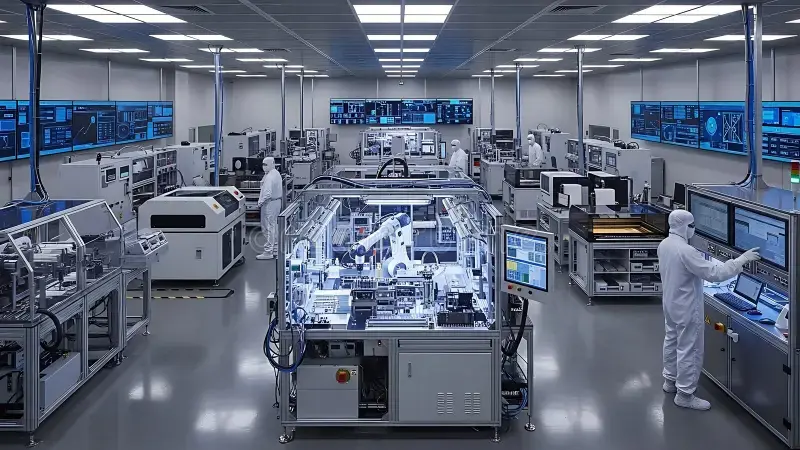
The complexity of the semiconductor supply chain plays a huge role as to why there is an AI chip shortage. The process of producing semiconductors involves multiple steps such as sourcing materials, fabrication, testing, and global distribution. Due to this, the process happens on a global scale in multiple different places, and a disruption in one part can slow down the entire process (Investopedia).
Fabrication is one of the hardest parts of the process because it requires niche technology, different facilities, and several years of investment to expand capacity. Chip fabrication is only done in very few regionals globally, also contributing to the delays in production and can create shortages and longer lead times. The geographic concentration has made the supply chain at risk to disruptions such as transportation delays and geopolitical tensions (Investopedia).

The demand for AI chips has increased due to cloud computing, machine learning, and generative AI. The growth has been pushing manufacturers and production capacities to their limits due to not being able to meet the demand. However, the semiconductor supply chain is becoming stronger because of investments and increases in domestic chip production. Manufacturing is expanding to the United States and Europe so that more chips can be produced (Semiconductor Industry Association). The improvement will slowly ease shortages over time but is still a challenge in the current day.
Energy Problem in Correlation to AI Growth
AI growth is increasingly constrained by energy infrastructure rather than technological capability alone. As generative AI adoption accelerates, data center electricity demand is rising faster than grid expansion and modernization. Deloitte projects that AI‑driven data center power consumption will grow at double-digit rates through the late 2020s, stressing transmission capacity, increasing local power shortages, and lengthening interconnection timelines. In many regions, energy availability has become a binding constraint on how quickly AI infrastructure can scale (Deloitte, 2025).

These constraints are already translating into real delays. Reports published in 2026 show that a significant share of planned data center projects have been postponed because grids cannot deliver sufficient power or complete interconnections fast enough. Grid connection timelines often exceed the time required to build a data center itself, forcing technology companies to either delay projects or pursue alternative energy strategies. Analysts and policymakers increasingly describe electricity, not chips, as the primary bottleneck shaping the pace and geography of AI growth (Reuters, 2026; Belfer Center, 2026).
Microsoft CEO Satya Nadella revealed that Microsoft is struggling to build data centers quickly enough to keep pace with the rapid advancement of AI. Access to energy and the slow speed of data center construction emerged as the limiting factors of AI expansion, surpassing the effects of the chip shortage. The Microsoft executive expressed the dramatic turn for the industry that this lack of power marks. Similarly, Alphabet, the parent company of Google, is running into the same issue as Microsoft. Alphabet’s AI growth is creating increasing electric demands because the data centers need more power as Gemini, Search, Cloud, and YouTube workloads expand. Additionally, both companies are working around concerns of AI data centers overloading local power systems during peak demand. (AI Magazine, 2025; Yahoo Finance, 2026)
Both these companies have been looking for alternative ways to power their data centers. They have been investing heavily in more sustainable and effective approaches, one of the main methods being nuclear power. Constellation Energy, America’s largest nuclear energy producer, has been partnering with Microsoft and Alphabet to solve this issue. Microsoft signed a $3 billion deal with them to resurrect the Three Mile Island plant in Pennsylvania as the Crane Clean Energy Center. The goal is to purchase nuclear energy from this plant for the next 20 years. Similarly, Alphabet is working alongside NextEra Energy as well to bring Iowa’s only nuclear power plant, Iowa’s Duane Arnold Energy Center, back online by 2029. This $1.6 billion deal prompts Alphabet to purchase electricity from them for the next 25 years (AOL, 2026).
Nuclear Energy as a solution for AI chip
Nuclear energy has emerged as a viable solution because it provides consistent, carbon-free baseload power. Unlike renewable sources such as wind and solar, nuclear power can operate continuously, which is essential for AI workloads that require uninterrupted computing capacity. In response, major technology companies have begun directly investing in nuclear energy to secure long-term power access for AI data centers. In 2026, firms including Meta, Amazon, and Google announced partnerships with next generation nuclear developers, particularly small modular reactor (SMR) companies, to support future AI related energy demand (Reuters, 2026; The Economic Times, 2026).
At the same time, reducing energy demand through more efficient chip design is becoming just as important as expanding supply. Recent research highlights advances in compute‑in‑memory and neuromorphic chip architectures that significantly lower power consumption by reducing data movement within chips. Studies published in 2026 show that these designs can improve efficiency without sacrifices in performance, making them promising solutions for easing the energy strain associated with AI chips (University of Michigan Engineering, 2026; Nature, 2026). In addition, researchers at Tufts University demonstrated AI systems that could use up to 100 times less energy through hybrid neural‑symbolic approaches, showing that smarter architectures can meaningfully reduce overall power needs (ScienceDaily, 2026).
While nuclear power provides the reliability required for AI growth, renewable energy remains an important complementary source. Data centers increasingly rely on hybrid energy strategies that combine nuclear power with wind, solar, and energy storage. Analysts note that renewables alone cannot meet AI’s continuous electricity demand but can reduce emissions when paired with firm power sources such as nuclear energy (Forbes, 2026).
Even with cleaner energy and more efficient chips, heat management remains a major challenge. AI servers now operate at extremely high-power densities, making traditional air-cooling systems insufficient. By 2026, liquid cooling technologies have become a standard solution for many AI‑focused data centers, allowing for higher performance while lowering energy waste and improving system reliability (Lombard Odier, 2026; Schneider Electric, 2026).
Together, these developments show that the AI chip shortage is connected to energy availability. Nuclear energy, energy‑efficient chip design, renewable integration, and advanced cooling systems all play a role in supporting the long-term scalability of AI infrastructure.
Sustainability and Ethical implications
Nuclear energy is proven to be a cleaner shift and will be better for the environment. Nuclear energy delivers large-scale, but low-carbon power. It is ranked as the cleanest power source across the whole lifecycle, containing processes like uranium mining, fuel fabrication, plant construction, operation, and decommissioning. This is because nuclear reactors produce electricity without releasing carbon dioxide throughout the operation. Nuclear power generates energy through the process of splitting uranium atoms. The heat released spins a turbine, eliminating the need for fossil fuels. Not only is it sustainable, but it is also a reliable and continuous source of energy for growing energy demands. It supplies constant power, reducing reliance on fossil fuel backups during pauses in wind and solar energy (Nuclear Energy Institute, 2026; International Atomic Energy Agency, 2026).
Although nuclear energy is better for the environment, there are many ethical concerns that remain around it. The biggest of these concerns is the radioactive waste it produces. The waste can remain hazardous for hundreds, and even thousands of years. The process to appropriately store it requires secure facilities, which are difficult to maintain. Another ethical dilemma is the risk of potential catastrophic accidents, like Chornobyl and Fukushima. These events involved nuclear malfunctions releasing radiation, leading to fatalities and uninhabitable, restricted land (Energy Sustainability Directory, 2025).
The ethical question of whether the benefit of low-carbon energy justifies the risk on present and future generations is debated among many scholars. Some scholars argue that nuclear energy creates a more habitable environment, removing air pollutants that contribute to acid rain, smog, lung cancer, and cardiovascular diseases. Others argue that nuclear energy poses a health risk by increasing the possibility of catastrophic events. Additionally, skeptics are against the release of large amounts of radioactive waste produced. Although it is argued that nuclear energy produces minimal, untraceable amounts of waste, nuclear fuel is extremely dense. Scientists are studying methods to reprocess and recycle waste produced by nuclear energy. Regardless, skeptics still doubt the safety and ethicality of the nuclear energy process, even though it is seen as a strong low-carbon alternative for large-scale projects. This tradeoff is slowing down efforts to utilize nuclear energy to power AI chips (Energy Sustainability Directory, 2025; US Department of Energy, 2021).
Strategic Implications for Firms and Investors
The speed of the development of AI is prompting businesses to reconsider their fundamental strategies, with supply chain management emerging as one of the most important areas. Instead of relying on traditional vendors, technology companies are acquiring stakes in their semiconductor manufacturers and signing long-term contracts to ensure access to necessary hardware. Additionally, the amount of money spent on the infrastructure required for AI systems is skyrocketing to several hundreds of billions, creating substantial entry barriers. As a result, this shift suggests that competitive advantage in AI increasingly depends on control over upstream resources (Reuters).
Another important factor is the rising demand for specific parts, such as high-speed memory. Only a small number of firms have the capability to produce these parts, meaning that they have a strong bargaining power when it comes to prices. (Fortune). At the same time, supply chain fragility is emerging as a major risk. Semiconductor manufacturing relies on a range of special inputs, such as helium, which are subject to disruptions from politics and the supply chain (WSJ). Such limitations imply that manufacturing could cease irrespective of demand, requiring companies to focus on resilience by embracing diversity and strategic planning. All these trends lead to the centralization of the power structure in the AI sector, whereby companies that have an upper hand in semiconductor technology, storage, and raw materials end up dominating the market.
Conclusion
The AI chip shortage encompasses focusing on technology, supply chains, and energy infrastructure. The shortage is due to rising demand for advanced semiconductors, fabrication capacity, and the complexity of global supply chains which have increased costs and shifted market power towards companies that can secure upstream resources. At the same time, the growth of AI is creating demands for electricity which energy systems cannot meet. While nuclear energy cannot increase semiconductor production, it can help by providing low-carbon baseload electricity, which is a solution for AI growth. Even though this is a potential solution, it has its challenges. Radioactive waste and safety risks are something that must be considered before implementing it. Ultimately, the AI chip shortage will require a combination of solutions before it can be improved, such as stronger semiconductor supply chains, sustainable power solutions, and chip innovation.


Comments